
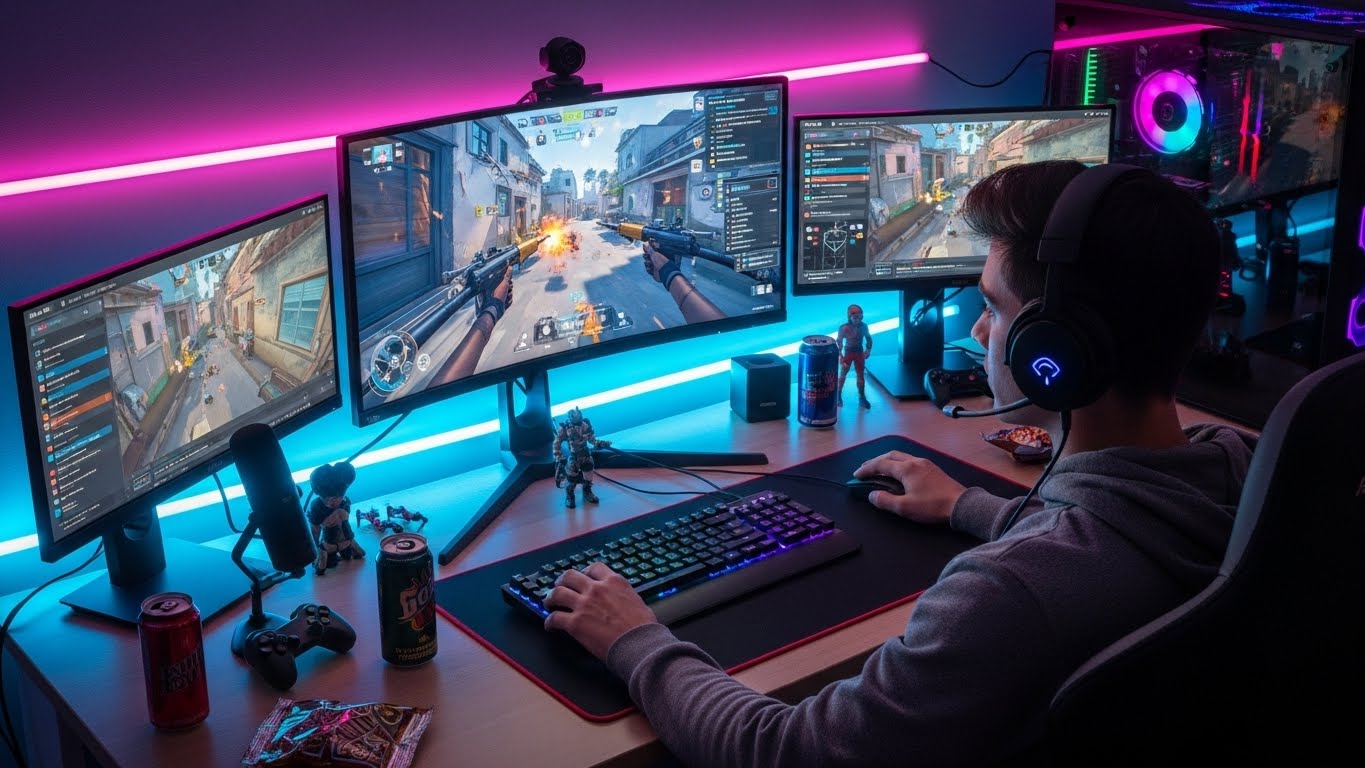
Gaming has come a long way from its humble beginnings. From pixelated characters and simple mechanics to the incredibly immersive worlds we see today, the journey of gaming has transformed both the entertainment industry and the way we interact with digital spaces. It’s no longer just about passing the time; gaming has evolved into a massive global culture, influencing everything from technology to social connections. This post will delve into the history of gaming, its impact on society, and its future.
The Early Days of Gaming
Gaming as we know it started in the 1970s with arcade machines like Pong and Space Invaders. These games were simple in nature: players would control a single element on-screen, often a small pixelated object, and engage in basic tasks like hitting a ball or shooting at enemies. Though the graphics were crude by today’s standards, these early titles laid the groundwork for the gaming industry. Players would insert coins into the machines to play, and the arcade quickly became a social gathering point.
The popularity of these games marked the beginning of a new form of entertainment. Though the technology of the time was basic, the appeal was universal: people of all ages could gather around a machine and compete for high scores. This spirit of competition remains central to the gaming culture today.
The Rise of Home Consoles
As the technology behind video games advanced, so did the accessibility of these games. In the 1980s, home consoles like the Atari 2600, the Nintendo Entertainment System (NES), and the Sega Genesis brought the arcade experience into living rooms across the globe. This era of gaming was instrumental in shaping the culture of gaming. Games became more varied, with genres like platformers, adventure games, and sports titles taking hold.
The NES was particularly pivotal, with iconic titles like Super Mario Bros., The Legend of Zelda, and Metroid becoming household names. These games not only featured engaging gameplay but also introduced intricate storylines and expansive worlds that were previously unimaginable. Players no longer just moved from one level to the next; they explored entire worlds, meeting characters and solving puzzles along the way. This evolution added a layer of depth and narrative complexity to gaming, turning it into an art form that was comparable to books and movies in terms of storytelling.
By the early 1990s, gaming had established itself as a significant part of popular culture. Titles like Super Mario 64, released for the Nintendo 64 in 1996, helped establish 3D gaming as the standard. The introduction of 3D graphics opened up a new world of possibilities for game developers, leading to the creation of more realistic and immersive gaming environments. This was the dawn of a new era in which the boundaries between the virtual and real worlds began to blur.
The Online Gaming Revolution
The next major shift in the gaming world occurred in the late 1990s and early 2000s with the advent of online gaming. The rise of the internet meant that gamers no longer had to play in isolation. Multiplayer games like Warcraft, Starcraft, and Diablo allowed players to connect from different parts of the world and compete against each other in real time. This created an entirely new social dynamic within gaming, with communities of players forming online to share tips, strategies, and experiences.
The introduction of broadband internet further accelerated this shift. Games like World of Warcraft, Halo 2, and Counter-Strike brought online multiplayer gaming to the mainstream, creating a new subculture of professional gamers, streamers, and content creators. The ability to connect with others made gaming not just a solitary activity but a shared experience that could be enjoyed with friends and strangers alike.
This period also saw the rise of gaming tournaments, with major events like The International for Dota 2 and E3 becoming some of the most significant celebrations of gaming culture. Competitive gaming, or eSports, began to take off during this time and has since grown into a billion-dollar industry.
The Impact of Mobile Gaming
Mobile gaming emerged as another pivotal chapter in the history of video games. With the advent of smartphones in the late 2000s, gaming became something that could be carried in your pocket. Games like Angry Birds, Candy Crush Saga, and Pokémon GO made gaming more accessible than ever, allowing players to engage in quick, casual gaming experiences on their mobile devices.
Mobile games often differ from traditional console or PC titles in that they are typically shorter, less complex, and more focused on providing instant gratification. However, the success of mobile gaming shows how expansive and diverse the world of gaming has become. No longer confined to one format, gaming now spans multiple devices, from consoles to PCs to smartphones, providing players with more options than ever before.
Mobile gaming also introduced a new business model: free-to-play games with in-app purchases. While some argue that this business model has led to an increase in microtransactions and pay-to-win mechanics, it has also democratized gaming, making it accessible to a wider range of people. Many mobile games are free to download and play, with the option to purchase additional content, making it easy for anyone to get started without a significant upfront cost.
The Rise of Streaming and Content Creation
Streaming has revolutionized how we experience gaming. Platforms like Twitch, YouTube Gaming, and Facebook Gaming allow players to broadcast their gameplay to an audience, creating a new wave of content creators, influencers, and professional gamers. Streaming has become a massive industry in its own right, with some streamers earning millions of dollars from donations, sponsorships, and subscriptions.
This shift has transformed the gaming community from one that was previously centered around playing to one that’s focused on sharing experiences. Viewers can now watch others play games in real-time, offering a sense of connection and community. For many, watching a skilled player take on a game is as exciting as playing it themselves. It’s a unique form of entertainment that combines the excitement of gaming with the thrill of performance.
Content creators have also introduced new ways of engaging with games. Let’s Play videos, walkthroughs, speedruns, and game reviews allow players to interact with a game on a deeper level, learning about its mechanics, narrative, and design. These videos also act as a form of digital storytelling, where players share their personal experiences within games, creating a dialogue between creators and viewers.
The Future of Gaming: Virtual Reality, AI, and the Metaverse
As technology continues to advance, the future of gaming holds even greater promise. Virtual reality (VR) and augmented reality (AR) are already beginning to transform the way we experience games. With VR headsets like the Oculus Rift, HTC Vive, and PlayStation VR, players can immerse themselves in virtual worlds in a way that was previously unimaginable. VR has the potential to create hyper-realistic environments where players can not only see and hear the game world but also physically interact with it.
In addition to VR, AI is playing an increasingly important role in gaming. AI is being used to create more intelligent, dynamic, and responsive game worlds. NPCs (non-playable characters) are becoming more lifelike, with behavior patterns that make them seem more real and unpredictable. This helps create richer, more engaging experiences for players.
The concept of the “metaverse” is also gaining traction. The metaverse refers to a collective virtual space where users can interact with each other and digital environments in real-time. While still in its infancy, the metaverse could eventually become a central hub for gaming, allowing players to not only play games but also socialize, work, and create within the same virtual universe.
Conclusion: Gaming as a Cultural Force
From its early days as a niche hobby to its current status as a global cultural phenomenon, gaming has had an undeniable impact on the world. It has shaped technology, entertainment, social interactions, and even business models. The rise of online multiplayer games, mobile gaming, streaming, and emerging technologies like VR and AI suggests that the future of gaming will continue to innovate and captivate audiences for years to come.
Today, gaming is much more than a pastime; it’s an integral part of modern culture, offering players a chance to escape, connect, and explore new worlds. As technology continues to push the boundaries of what’s possible, one thing is certain: gaming will remain at the forefront of entertainment, creativity, and innovation.