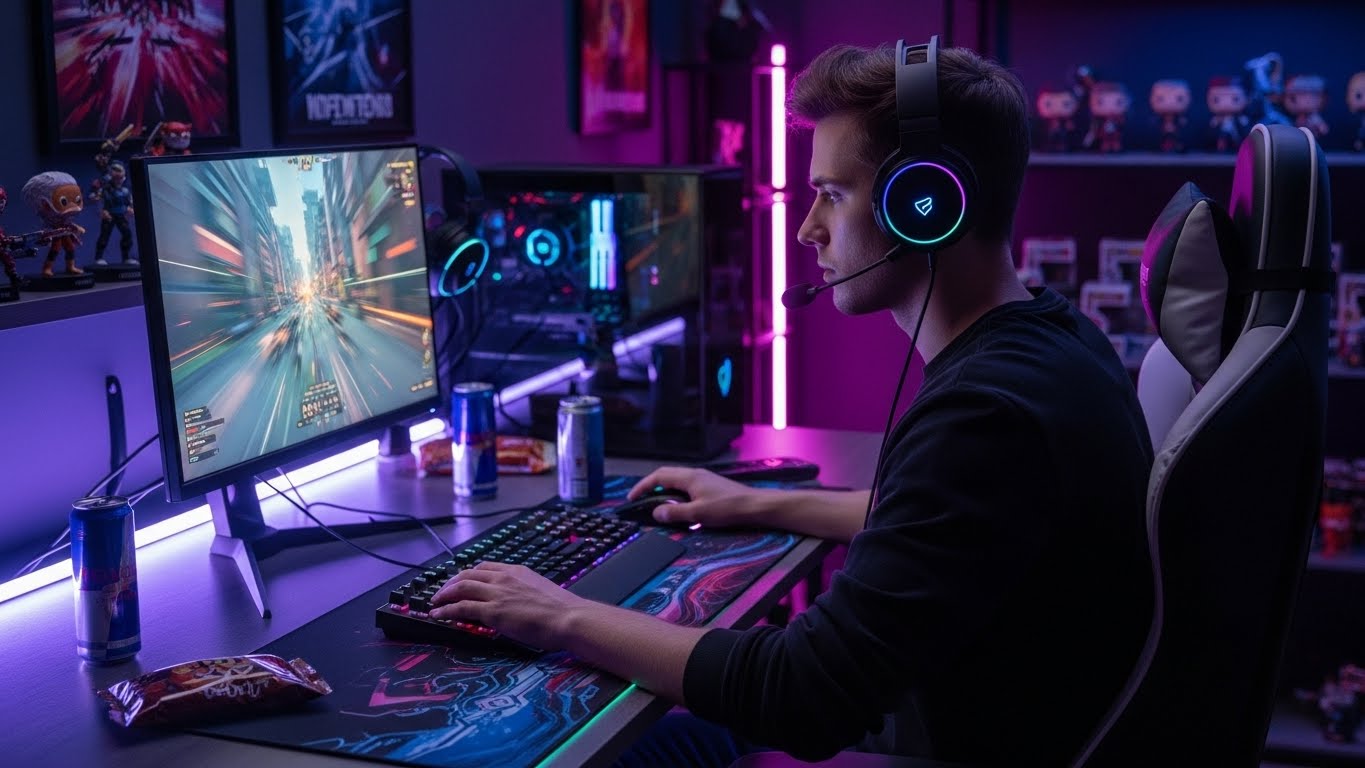

Gaming has come a long way from the days of pixelated screens and simple arcade machines. Today, it is a global industry worth billions, influencing entertainment, technology, education, and even social interactions. What was once considered a hobby for a niche group has now become a mainstream phenomenon, shaping the way people connect, compete, and create. Gaming is more than just entertainment—it is a medium for storytelling, skill development, and community building. This blog explores the impact of gaming on society, the benefits it offers, and the challenges it faces in an increasingly digital world.
The Evolution of Gaming
The history of gaming dates back to the 1970s, with arcade games like Pong and Space Invaders capturing the imagination of early players. The 1980s and 1990s saw the rise of home consoles and personal computers, making gaming accessible to a wider audience. Iconic titles such as Super Mario, Sonic the Hedgehog, and The Legend of Zelda helped define the culture of gaming and set the stage for innovation in storytelling and gameplay.
The 2000s introduced online multiplayer games and massive digital platforms, allowing players from around the world to connect and compete in real-time. Today, gaming spans multiple platforms, including consoles, PCs, and mobile devices. Virtual reality, augmented reality, and cloud gaming are redefining the experience, providing more immersive and interactive gameplay than ever before.
Gaming as a Form of Entertainment
Gaming offers a unique form of entertainment that combines storytelling, strategy, and interactivity. Unlike traditional media, such as movies or television, gaming allows players to influence outcomes, make decisions, and explore vast virtual worlds. Open-world games, role-playing adventures, and sandbox experiences provide creative freedom, enabling players to craft their own narratives and engage in problem-solving activities.
The diversity of genres ensures that there is something for everyone. From first-person shooters and sports simulations to puzzle games and narrative-driven experiences, gaming caters to a wide range of interests and skill levels. This versatility has helped gaming become a dominant force in global entertainment, rivaling even cinema and music in cultural impact.
The Cognitive Benefits of Gaming
Gaming is not only entertaining but also intellectually stimulating. Strategic and puzzle-based games improve critical thinking, problem-solving, and decision-making skills. Fast-paced action games enhance hand-eye coordination, reflexes, and spatial awareness. Multiplayer games, in particular, require players to plan, communicate, and adapt quickly to changing scenarios, fostering teamwork and leadership skills.
Research has also shown that gaming can enhance memory, attention, and cognitive flexibility. Players learn to process information rapidly, identify patterns, and multitask effectively. These mental benefits demonstrate that gaming is more than just leisure—it is a platform for cognitive development and skill acquisition.
Gaming and Social Connection
One of the most transformative aspects of gaming is its ability to connect people across the globe. Online multiplayer games, esports, and gaming communities provide opportunities for players to form friendships, collaborate, and compete with others in real-time. Social features, such as voice chat and online forums, enable players to communicate, strategize, and share experiences.
Gaming communities often extend beyond the digital world, fostering real-life connections and events. Tournaments, conventions, and fan gatherings allow players to meet, collaborate, and celebrate shared interests. This sense of belonging and camaraderie demonstrates the social value of gaming as a platform for community building and cultural exchange.
Gaming as a Career
The rise of professional gaming, or esports, has transformed gaming into a legitimate career path. Professional players, teams, and coaches now compete in organized leagues and international tournaments, earning substantial incomes through prize money, sponsorships, and streaming revenue. Esports events attract millions of viewers, with audiences rivaling those of traditional sports.
Beyond professional play, gaming has created opportunities in content creation, streaming, game development, journalism, and marketing. Platforms like Twitch and YouTube allow individuals to build personal brands, monetize gameplay, and reach global audiences. The gaming industry is no longer limited to players—it encompasses a wide range of careers in technology, media, and entertainment.
Gaming in Education and Skill Development
Gaming has increasingly found applications in education and skill development. Educational games, simulations, and gamified learning platforms engage students in interactive and immersive experiences. These tools promote problem-solving, critical thinking, collaboration, and creativity.
Serious games, used in fields like healthcare, engineering, and military training, allow learners to practice real-world skills in safe, controlled environments. For example, surgical simulations help medical students refine techniques, while flight simulators train pilots in complex scenarios. Gaming thus serves as an innovative medium for experiential learning and professional training.
The Impact of Technology on Gaming
Technological advancements have transformed gaming into a sophisticated and immersive experience. High-definition graphics, realistic physics engines, and advanced artificial intelligence create worlds that feel lifelike and dynamic. Virtual reality (VR) and augmented reality (AR) further enhance immersion, allowing players to interact with digital environments in novel ways.
Cloud gaming and streaming services are also revolutionizing accessibility, enabling players to access games on multiple devices without high-end hardware. This technological evolution has expanded the audience for gaming, making it more inclusive and widely available than ever before.
Gaming and Mental Health
Gaming has a complex relationship with mental health. On the positive side, it can reduce stress, provide relaxation, and offer a sense of achievement. Multiplayer games can foster social interaction and combat feelings of loneliness. Role-playing and narrative games can serve as outlets for creativity and self-expression.
However, excessive gaming can lead to negative outcomes, such as addiction, social isolation, and sleep disruption. Moderation, self-awareness, and responsible gaming habits are essential to maintain a healthy balance. When approached mindfully, gaming can be a valuable tool for mental stimulation and emotional well-being.
The Cultural Influence of Gaming
Gaming has become a powerful cultural force, influencing music, fashion, film, and art. Iconic characters, storylines, and worlds inspire fan art, cosplay, and creative media production. Gaming communities often create their own culture, including memes, traditions, and social norms, which can extend into mainstream culture.
Moreover, gaming has influenced storytelling in other media. Interactive narratives, branching storylines, and player-driven experiences have inspired filmmakers and authors to explore non-linear storytelling techniques, bridging the gap between digital and traditional forms of entertainment.
The Economic Impact of Gaming
The gaming industry is one of the largest and fastest-growing sectors in the global economy. Revenue comes from game sales, in-game purchases, subscriptions, merchandise, and esports events. This growth supports jobs in game development, design, programming, marketing, and event management.
Gaming also drives innovation in technology and entertainment, encouraging investment in artificial intelligence, graphics processing, and interactive media. As a result, gaming has become a key economic driver, influencing both local and global markets.
Challenges in the Gaming Industry
Despite its many benefits, the gaming industry faces challenges. Issues such as digital addiction, online harassment, and privacy concerns require attention from developers, regulators, and communities. Ethical considerations regarding monetization strategies, loot boxes, and microtransactions also impact the player experience.
Representation and diversity remain areas for improvement. Encouraging inclusivity in game design, character representation, and esports participation is essential to ensure that gaming is accessible and welcoming to all players. Addressing these challenges is crucial for the sustainable growth of the industry.
The Future of Gaming
The future of gaming promises continued innovation and integration with other aspects of life. Virtual reality, augmented reality, and mixed reality will create more immersive experiences, while artificial intelligence will make games smarter, adaptive, and personalized. Cloud-based gaming will make high-quality experiences accessible on a wider range of devices, eliminating hardware barriers.
Esports will continue to grow, with more professional leagues, international tournaments, and mainstream recognition. Gaming will also increasingly intersect with education, healthcare, and social platforms, highlighting its versatility and societal impact. The evolution of gaming will continue to shape how people connect, learn, and experience entertainment in the digital age.
Conclusion: Gaming as a Transformative Medium
Gaming is far more than a pastime—it is a transformative medium that blends entertainment, education, technology, and social connection. It fosters cognitive development, enhances creativity, builds communities, and creates career opportunities, all while providing immersive and enjoyable experiences.
From casual mobile games to professional esports competitions, gaming shapes culture, drives technological innovation, and connects people worldwide. While challenges exist, the potential for positive impact is immense. Gaming has evolved into a powerful force that influences how we think, interact, and experience the world, making it an integral part of modern society.
As gaming continues to grow and evolve, it reminds us that digital worlds are not separate from reality—they are extensions of human creativity, collaboration, and ambition. By embracing gaming responsibly and innovatively, society can harness its full potential to educate, entertain, and unite people across the globe.