
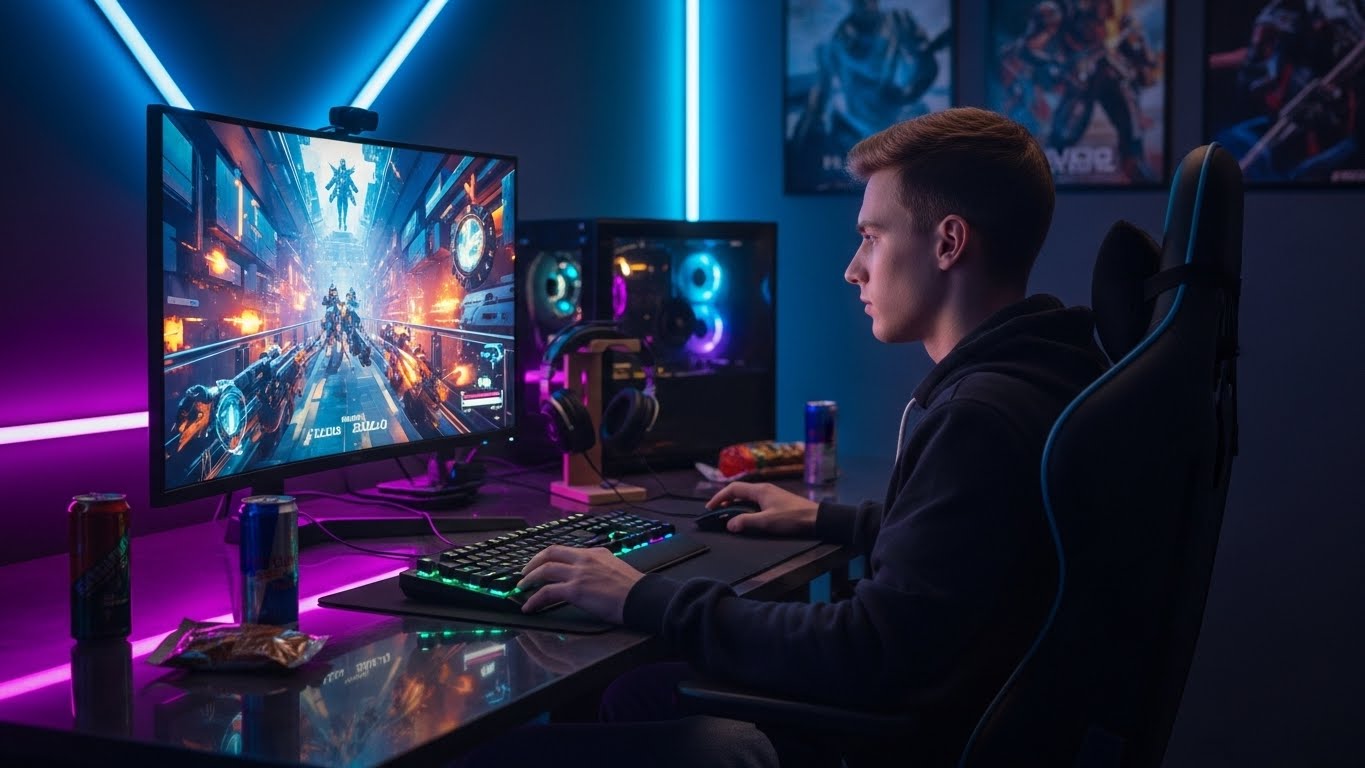
Introduction: The Rise of Gaming in Modern Society
In just a few decades, video gaming has evolved from a niche pastime to one of the most prominent and influential cultural forces in the world. What began as simple, pixelated graphics on arcade screens has transformed into a global industry worth hundreds of billions of dollars, with millions of players across the world. Gaming has gone from being a hobby enjoyed by a small group to an entertainment medium that influences everything from social connections to technology, art, and even education. Today, video games are a mainstay in our daily lives, shaping how we interact with technology, our peers, and the broader world. But how did we get here? In this post, we’ll explore the history and evolution of video games, the changing culture around gaming, and what the future holds for this ever-growing industry.
The Humble Beginnings: From Arcades to Consoles
The story of video gaming begins in the 1970s, a time when computers were just starting to emerge as more than scientific tools. Early video games were often simple and focused on basic mechanics. Titles like Pong, created by Atari in 1972, were revolutionary for their time, offering a form of interactive entertainment that had never been seen before. Arcades became the epicenter of gaming culture during this era, with young people flocking to these spaces to engage in high-score battles and discover the latest gaming trends.
By the late 1970s and early 1980s, home consoles began to make their mark, allowing people to enjoy video games in the comfort of their own homes. The Atari 2600, released in 1977, was one of the first widely successful home gaming consoles. It marked the beginning of a new era in which gaming moved from public arcades into private spaces. In this early stage, games were still relatively simple—2D graphics and minimal sound effects—but the potential for gaming to become a major form of entertainment was already apparent.
The Golden Age: Consoles, Handheld Devices, and the Explosion of Genres
The 1980s and 1990s are often referred to as the “Golden Age” of video games. During this time, the gaming industry experienced exponential growth, both in terms of technology and cultural impact. The release of the Nintendo Entertainment System (NES) in 1985 was a game-changer, bringing gaming into mainstream culture. With beloved franchises like Super Mario Bros., The Legend of Zelda, and Metroid, Nintendo redefined what gaming could be, introducing players to immersive worlds and compelling characters. These games demonstrated the potential for video games to be more than just entertainment—they could be rich, narrative-driven experiences.
Around the same time, other consoles like the Sega Genesis and later the Sony PlayStation emerged, offering new experiences and ushering in a new wave of competition between gaming platforms. The development of 16-bit and 32-bit graphics helped elevate games to new levels of realism, while iconic franchises such as Sonic the Hedgehog, Final Fantasy, and Metal Gear Solid began to gain large fan bases.
Handheld gaming also experienced a massive boom with devices like the Game Boy, released by Nintendo in 1989. For the first time, players could take their favorite games with them on the go, allowing gaming to reach audiences who otherwise may not have had access to consoles or arcades. As portable games evolved, so did the variety of genres, including puzzle games, platformers, and adventure games, leading to a surge in the number of players and the diversity of gaming experiences.
The Online Revolution: Connecting Players Worldwide
As the internet became more widely accessible in the late 1990s and early 2000s, gaming experienced another major transformation: online multiplayer. The introduction of internet connectivity into gaming allowed players to compete against, cooperate with, and communicate with others around the world in real time. Titles like Warcraft, Quake, and Diablo ushered in the era of online multiplayer, and this feature quickly became one of the most important aspects of modern gaming.
The early days of online gaming were filled with dial-up connections, lag, and clunky servers. However, this period laid the foundation for the online gaming ecosystems we enjoy today. The introduction of consoles with online capabilities, such as the Xbox Live service for the original Xbox in 2002, made gaming even more accessible. For the first time, players could jump into a competitive match, team up with friends, or join a global community with ease.
This global connectivity birthed massive online multiplayer games like World of Warcraft, League of Legends, and Fortnite, which have since become household names. These games have not only changed how players interact with one another but also created entire subcultures and communities centered around shared experiences, team strategies, and even professional eSports competitions.
The Emergence of eSports: Gaming as a Profession
With the rise of online multiplayer gaming came the rise of eSports, or competitive gaming, which has since become one of the fastest-growing sectors in the entertainment world. eSports tournaments, which offer significant cash prizes, attract millions of viewers both online and in person. Games like Dota 2, Counter-Strike: Global Offensive, and Overwatch have turned professional gamers into celebrities, with streaming platforms like Twitch and YouTube allowing fans to follow their favorite players and teams.
eSports has also created new career opportunities, ranging from professional players and commentators to team coaches, analysts, and event organizers. Just as traditional sports offer pathways for athletes to succeed, eSports has created a professional landscape for skilled gamers to compete at the highest level. This has legitimized gaming as not just a hobby, but as a viable career path for many young people around the world.
The Technological Leap: From 2D to Virtual Reality
As gaming technology continued to advance, so did the experiences that players could enjoy. The leap from 2D to 3D was a monumental moment in gaming history, with games like Super Mario 64 and The Legend of Zelda: Ocarina of Time pushing the boundaries of what was possible with hardware. These games not only introduced expansive, open-world environments but also established the concept of player freedom and exploration.
The next significant technological leap came with the advent of virtual reality (VR) and augmented reality (AR). VR gaming, which immerses players in fully realized virtual environments using headsets like the Oculus Rift and PlayStation VR, offers an entirely new level of immersion. Players can now experience gaming worlds as if they are physically inside them, creating new opportunities for interaction and gameplay. Augmented reality, seen most prominently in games like Pokémon GO, overlays digital content onto the real world, blending physical and virtual spaces in exciting ways.
These innovations have not only made gaming more immersive but have also opened up new avenues for educational games, interactive simulations, and even therapy. The potential for VR and AR in the gaming industry is limitless, and we are only beginning to scratch the surface of their capabilities.
The Cultural Impact of Gaming: A Global Phenomenon
As gaming has grown, so too has its cultural significance. Video games have become more than just entertainment; they have become a part of the social fabric of modern life. People now gather to play games with friends, attend gaming conventions, watch live streams of gameplay, and even create their own content based on their favorite games.
The influence of gaming can be seen in popular culture, with characters like Mario, Link, and Lara Croft becoming cultural icons. Gaming franchises have expanded into other forms of media, including movies, TV shows, books, and comics, helping to solidify gaming’s place in mainstream culture. The gaming industry has also spawned new forms of entertainment, including game-related music, cosplay, fan fiction, and online communities, where players can share their experiences and create new content together.
Furthermore, the rise of social media and platforms like Twitch, YouTube, and TikTok has given rise to gaming influencers, who have become some of the most influential figures in popular culture. These influencers not only play games but also build personal brands, interact with their followers, and create a sense of community that extends beyond gaming itself.
The Future of Gaming: Trends to Watch
The future of gaming is brighter than ever, with numerous technological advancements on the horizon. As the power of gaming hardware continues to grow, we can expect more immersive and detailed game worlds, as well as faster load times and smoother gameplay. Artificial intelligence (AI) will continue to improve, leading to more dynamic and responsive game environments, where NPCs (non-playable characters) react to player behavior in increasingly lifelike ways.
Additionally, as the global internet infrastructure improves, we are likely to see more players engaging in cloud gaming, where they can play high-quality games on devices like smartphones, tablets, and low-powered laptops without needing expensive hardware. This will open up gaming to even more people, making it more accessible than ever before.
Another exciting development is the continued integration of virtual reality (VR) and augmented reality (AR) into gaming experiences. As these technologies improve and become more affordable, we may see a significant shift in how we play and interact with games, moving toward a more immersive, physical experience.
Conclusion: The Ever-Growing World of Gaming
The journey from simple arcade games to the massive, immersive worlds we experience today has been nothing short of extraordinary. Video gaming has evolved into a multifaceted industry that touches almost every aspect of modern life. From technology to culture, education to entertainment, gaming has firmly established itself as a global force. And as the industry continues to grow and innovate, the possibilities for the future are boundless. Whether you’re a casual player or a professional, a fan of the art form or a competitor in the world of eSports, one thing is certain—gaming will continue to shape the world for years