
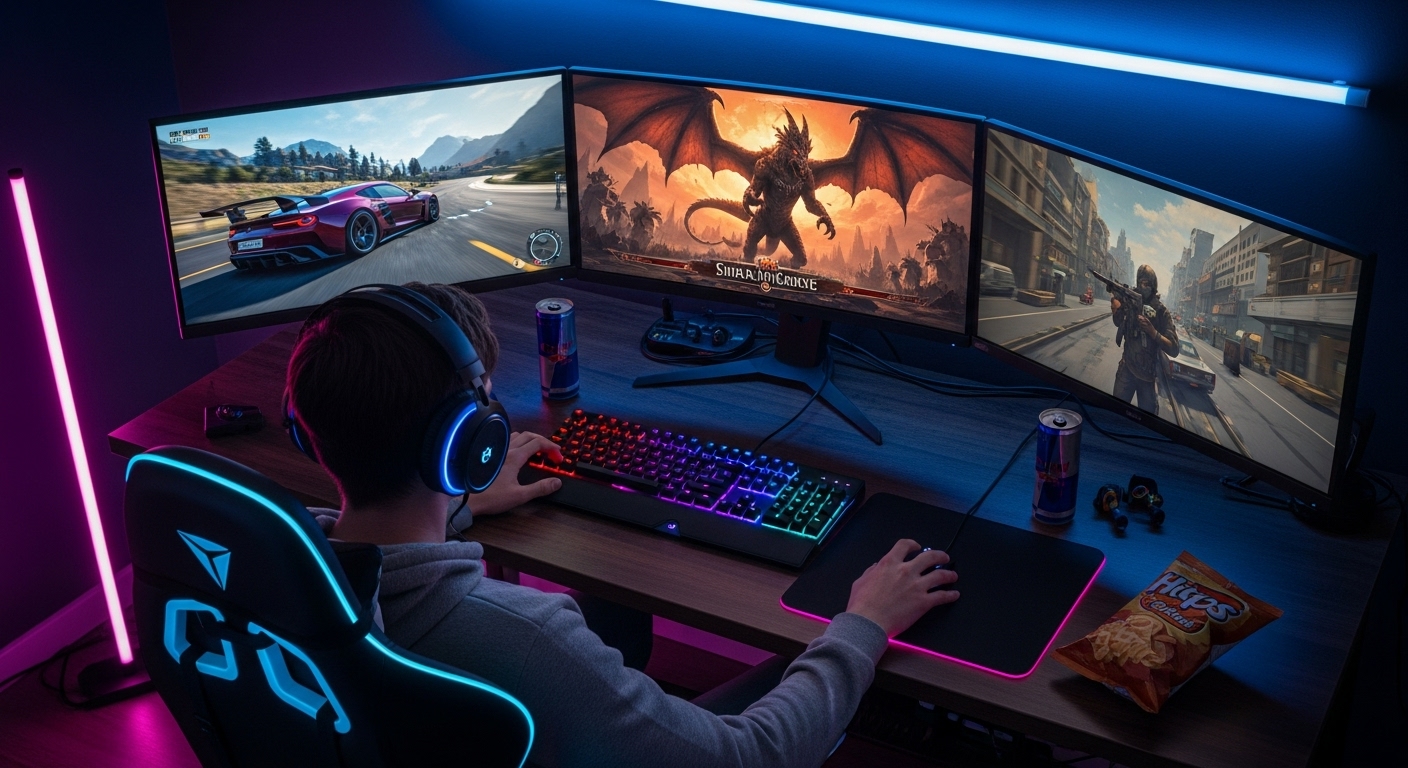
Introduction: A Global Revolution
Gaming has evolved from a niche hobby to a global phenomenon, becoming one of the most influential forms of entertainment in modern society. Once a pastime enjoyed by a small group of enthusiasts, it has now grown into a multi-billion-dollar industry with a diverse and expanding audience. From casual mobile games to complex virtual realities and competitive esports, gaming has something to offer everyone. It transcends cultural boundaries, creating a universal language of entertainment.
In this blog post, we will explore the transformative journey of gaming, the various genres that have emerged over the years, the impact of technology on gaming experiences, and the cultural significance gaming holds in today’s world.
The Rise of Gaming: A History of Innovation
The history of gaming is rooted in the development of computers and electronics. The earliest video games emerged in the 1950s and 1960s as experiments in interactive entertainment. These early games were simple, text-based adventures or basic graphical simulations. It wasn’t until the early 1970s that gaming began to take shape as an industry. One of the first commercially successful arcade games, Pong, was released by Atari in 1972, and it helped launch the golden age of arcade gaming.
By the 1980s, home gaming consoles like the Nintendo Entertainment System (NES) and the Sega Genesis brought video games into living rooms around the world. These consoles allowed gamers to experience high-quality graphics and gameplay at home, further cementing gaming as a major entertainment medium. The 1990s saw a rise in more sophisticated game development, with titles like Super Mario 64 and The Legend of Zelda: Ocarina of Time introducing 3D gameplay and immersive worlds.
In the 2000s, the gaming industry experienced a technological explosion. With the launch of powerful consoles like the PlayStation 2, Xbox, and the personal computer (PC) gaming boom, the scope of gaming expanded dramatically. More intricate stories, complex multiplayer features, and more realistic graphics became the norm. In today’s world, gaming has advanced to include virtual reality (VR), augmented reality (AR), and cloud gaming, continuing to push the boundaries of interactive entertainment.
The Different Worlds of Gaming: Types and Genres
Gaming today is not a one-size-fits-all experience. The sheer variety of games available caters to every type of player, from casual gamers to hardcore enthusiasts. Let’s take a look at some of the most popular genres that have shaped the gaming landscape.
Action Games: The Thrill of the Moment
Action games are often characterized by fast-paced gameplay that requires quick reflexes and good hand-eye coordination. Titles like Grand Theft Auto V, Call of Duty, and God of War exemplify this genre. These games immerse players in intense combat situations, whether it’s navigating treacherous landscapes, engaging in hand-to-hand combat, or participating in high-speed chases.
The action genre has evolved over time to include open-world experiences, where players can explore vast, dynamic environments at their own pace. Games like Red Dead Redemption 2 and The Witcher 3: Wild Hunt have elevated the action genre by incorporating rich narratives and deeper character development into their gameplay, making them as much about the story as the action itself.
Role-Playing Games (RPGs): Crafting Stories and Worlds
RPGs have long been a staple of the gaming world, offering players the chance to become the hero (or antihero) of their own stories. These games typically involve character development, narrative-driven quests, and exploration of vast, often fantastical worlds. Games like The Elder Scrolls V: Skyrim, Final Fantasy, and Mass Effect allow players to immerse themselves in meticulously crafted universes.
RPGs can take on different forms, from traditional turn-based battles in games like Final Fantasy to action-oriented RPGs like Dark Souls and The Witcher 3. One of the key aspects of RPGs is the emphasis on player choice, allowing gamers to make decisions that impact the direction of the story and the fate of the characters involved.
Strategy Games: Tactics and Planning
Strategy games are all about careful planning, resource management, and tactics. These games require players to think critically and anticipate the moves of their opponents. Whether playing Starcraft II, Civilization VI, or XCOM: Enemy Unknown, strategy games offer experiences that test the player’s ability to manage resources, control armies, or build empires.
Strategy games can take on various forms. Real-time strategy (RTS) games, such as Command & Conquer and Age of Empires, focus on managing units and making split-second decisions during fast-paced battles. Turn-based strategy (TBS) games, like Fire Emblem and Advance Wars, allow for more methodical planning where players can take their time to make decisions without the pressure of real-time action.
Simulation Games: Building and Creating
Simulation games provide a unique experience by allowing players to manage virtual versions of real-world systems or build complex creations. Popular games in this genre include The Sims, Minecraft, and SimCity. These games allow players to construct cities, design homes, or even simulate the daily lives of characters in a virtual world.
In Minecraft, players are free to explore, gather resources, and build structures in an open world made entirely of blocks. In The Sims, players can control the lives of virtual characters, guiding them through relationships, careers, and personal growth. These games can be incredibly relaxing, offering a creative outlet where players can lose themselves in the process of building, designing, or controlling virtual life.
Sports and Racing Games: Competition at Its Core
For those who enjoy sports, video games have provided virtual renditions of their favorite activities. FIFA, NBA 2K, and Madden NFL are among the most popular sports franchises, offering players the chance to simulate real-life games or lead their teams to victory. These games often feature realistic graphics, player movements, and detailed strategies, making them immersive experiences for sports fans.
Racing games like Gran Turismo, Need for Speed, and Mario Kart have also carved out their place in the gaming world. Whether racing on realistic tracks or navigating whimsical, fantastical courses, these games offer thrills and competition for players who enjoy high-speed action.
The Role of Technology in Gaming
The role of technology in gaming cannot be overstated. From the early days of simple pixelated graphics to the highly detailed, photorealistic visuals we see today, gaming has been at the forefront of technological innovation. The development of new hardware and software technologies has enabled game developers to create more immersive and engaging experiences for players.
Graphics and Visuals: Creating Photorealism
One of the most noticeable advancements in gaming technology has been in graphics. As computing power has increased, so too has the quality of visuals in video games. Today’s games feature highly detailed character models, lifelike environments, and realistic physics. Games like The Last of Us Part II and Cyberpunk 2077 showcase the power of modern graphics, with characters that look and move as though they are real people, and worlds that feel like tangible places.
The next frontier in visual technology is virtual reality (VR). VR headsets like the Oculus Rift and PlayStation VR have allowed gamers to experience games in a fully immersive 3D environment. In a VR game, players can physically move around, interact with objects, and experience a level of immersion that was previously unimaginable.
Cloud Gaming: The Future of Accessibility
Cloud gaming has emerged as another game-changer, offering players the ability to stream games without the need for powerful hardware. Services like Google Stadia, Xbox Cloud Gaming, and NVIDIA GeForce Now have made it possible for players to enjoy AAA titles without the need for an expensive gaming PC or console. Instead of downloading large files, games are streamed directly from powerful servers, allowing gamers to play on low-end devices, including smartphones and laptops.
Cloud gaming has the potential to democratize access to high-quality gaming, eliminating the need for players to purchase costly hardware. As internet speeds continue to improve and cloud infrastructure grows, it is likely that more gamers will take advantage of this new way to play.
Gaming Communities: The Social Aspect of Play
One of the most powerful aspects of gaming is its ability to bring people together. Online multiplayer games, forums, and streaming platforms like Twitch and YouTube have fostered large, vibrant communities where gamers can connect, share their experiences, and form friendships.
Through social media and gaming platforms, players can collaborate on missions, join teams, or participate in competitive tournaments. Esports, the professional league of competitive gaming, has grown into a billion-dollar industry, with top players gaining sponsorships, professional contracts, and massive followings. The sense of community within these spaces fosters collaboration and healthy competition, making gaming a highly social experience.
The Future of Gaming: What’s Next?
The future of gaming is bright, with innovations on the horizon that promise to reshape the industry even further. Virtual reality and augmented reality are set to become more mainstream, offering players even more immersive experiences. AI-powered games will offer more dynamic and responsive gameplay, creating worlds that feel alive. Additionally, cloud gaming will continue to grow, making high-quality gaming accessible to everyone.
Gaming is more than just a form of entertainment—it’s a global community, a creative outlet, and a driving force for technological advancement. As technology continues to evolve, so will the world of gaming, bringing new experiences and opportunities for players around the world.