
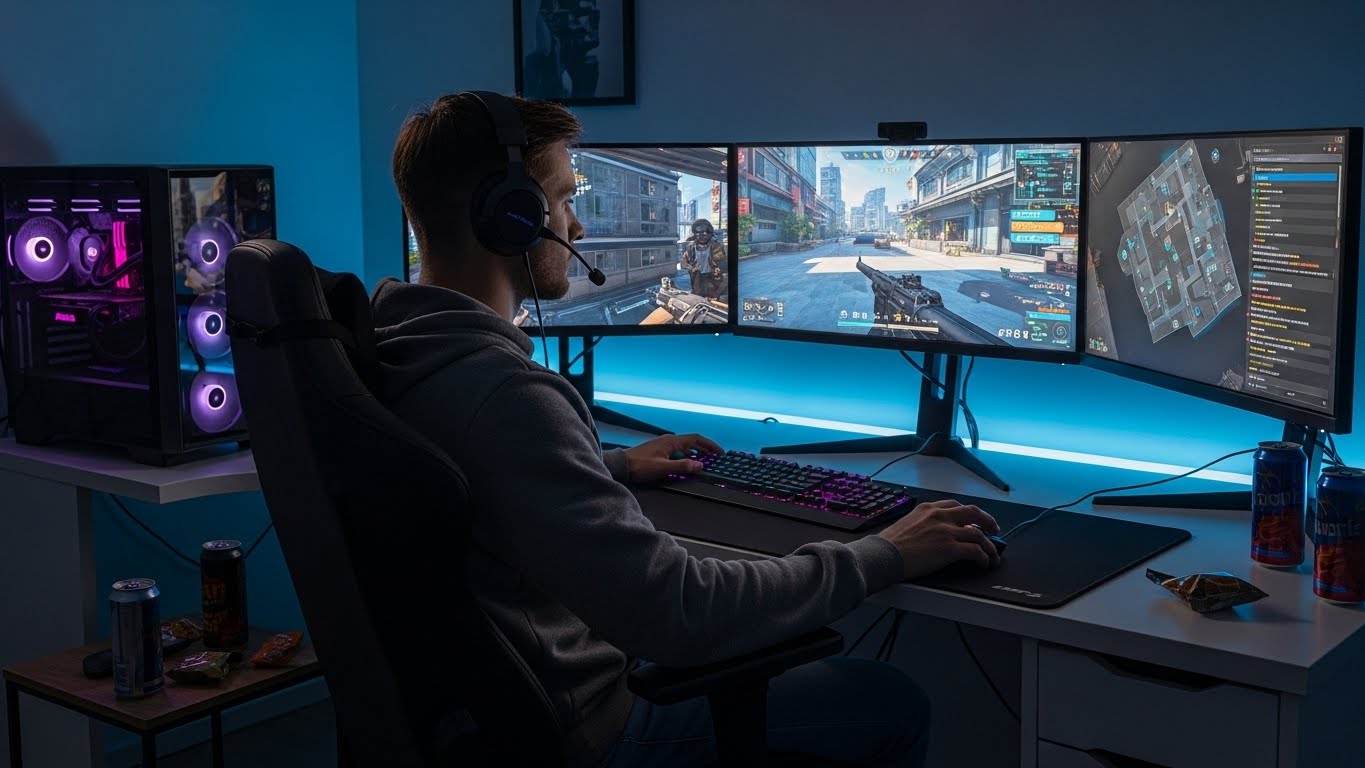
Introduction: Gaming as a Modern Cultural Phenomenon
Gaming has grown from a niche hobby into a global cultural phenomenon that influences entertainment, technology, education, and social interaction. Once considered a pastime limited to children or enthusiasts, gaming now captivates millions of people across all age groups, genders, and regions.
Modern gaming encompasses a diverse range of experiences, from mobile games and consoles to virtual reality and competitive esports. It engages players not only as consumers but also as active participants, shaping narratives, developing skills, and connecting with global communities. This blog explores the evolution of gaming, its cultural and cognitive impact, and how it continues to redefine entertainment in the digital era.
The Evolution of Gaming: From Pixels to Immersive Worlds
The history of gaming traces back to simple arcade games in the 1970s and 1980s, such as Pac-Man, Space Invaders, and Tetris. These games provided brief bursts of entertainment with simple mechanics and limited graphics but laid the foundation for the gaming industry.
The introduction of personal computers and home consoles revolutionized gaming, allowing for more complex gameplay, narrative depth, and interactive experiences. Titles like Super Mario, The Legend of Zelda, and Final Fantasy introduced expansive worlds, storytelling, and character development.
In recent years, advancements in graphics, physics engines, and artificial intelligence have created fully immersive experiences. Virtual reality and augmented reality now offer players interactive worlds where they can explore, create, and engage like never before. The evolution of gaming demonstrates how technology and imagination combine to create dynamic and engaging experiences.
Storytelling in Games: Interactive Narratives
One of the most compelling aspects of modern gaming is its storytelling potential. Unlike traditional media such as books or movies, games allow players to actively participate in shaping the narrative. Choices made during gameplay can alter outcomes, influence character development, and impact the game world.
Role-playing games and narrative-driven adventures, such as The Witcher series or Life is Strange, allow players to experience complex moral dilemmas, strategic decisions, and character-driven storytelling. The interactive nature of these games fosters empathy, critical thinking, and emotional investment.
Gaming as a storytelling medium also inspires creativity outside the game, influencing art, literature, music, and film. The ability to combine narrative with interactivity is what makes gaming uniquely powerful as an entertainment medium.
Gaming Communities: Building Social Connections
Gaming is not just an individual activity; it is deeply social. Online multiplayer games, cooperative missions, and competitive tournaments create communities that connect players worldwide.
These communities foster collaboration, teamwork, and communication. In team-based games like Overwatch, League of Legends, or Fortnite, players must strategize, coordinate, and support each other to succeed. Even casual multiplayer games encourage players to interact, form friendships, and develop social skills.
Gaming communities also provide platforms for fan art, strategy guides, mods, and discussion forums. These shared spaces allow players to contribute creatively and engage socially, transforming gaming from a solitary pastime into a dynamic, participatory culture.
Cognitive Benefits of Gaming
Gaming offers numerous cognitive benefits that go beyond entertainment. Different types of games develop various mental skills:
- Strategy Games: Enhance planning, resource management, and long-term decision-making.
- Puzzle Games: Improve problem-solving, pattern recognition, and logical reasoning.
- Action Games: Boost reflexes, hand-eye coordination, and spatial awareness.
- Role-Playing Games: Encourage empathy, ethical thinking, and narrative comprehension.
Regular gaming can also improve focus, memory, and multitasking skills. It challenges players to adapt, learn from mistakes, and develop strategies for complex scenarios. Educational games further demonstrate gaming’s potential as a learning tool, providing interactive and engaging ways to explore concepts in science, history, and mathematics.
Gaming as a Platform for Creativity
Games inspire creativity by offering expansive worlds and interactive systems. Many titles provide players with tools to create structures, design characters, or modify gameplay. Sandbox games like Minecraft and Roblox encourage exploration, innovation, and experimentation.
Beyond in-game creativity, gaming influences other artistic endeavors. Players create fan art, music remixes, videos, and narratives inspired by their favorite games. The skills developed in gaming—such as problem-solving, spatial awareness, and design thinking—often translate into careers in game development, animation, and digital media.
Mental Health and Emotional Benefits
Gaming can have positive effects on mental health and emotional wellbeing. Immersive games provide a form of escapism, allowing players to explore worlds and narratives while temporarily detaching from daily stressors.
Social gaming fosters community and reduces feelings of isolation. Multiplayer and cooperative games encourage teamwork, communication, and empathy, which can enhance social skills. Progression systems and achievements provide a sense of accomplishment, boosting confidence and motivation.
Even competitive gaming can teach resilience and emotional regulation, as players learn to cope with challenges, setbacks, and high-pressure situations. Gaming, when balanced with other activities, can support mental health and personal development.
Esports: Competitive Gaming on a Global Stage
Esports has transformed gaming into a professional and competitive arena. Tournaments for games like League of Legends, Dota 2, and Counter-Strike attract millions of viewers and offer substantial prize pools. Professional players train rigorously, similar to traditional athletes, refining skills, analyzing strategies, and maintaining physical and mental fitness.
Esports organizations function like professional sports teams, employing coaches, analysts, and managers. Competitive gaming has also created career opportunities beyond playing, including content creation, commentary, event management, and marketing. Esports exemplifies how gaming can evolve from a hobby into a legitimate, global profession.
Gaming and Education
Gaming is increasingly integrated into educational contexts. Schools and universities offer programs that incorporate gaming, teaching skills such as teamwork, leadership, strategic thinking, and digital literacy. Scholarships for competitive gaming provide students with opportunities to pursue higher education while honing their skills.
Educational games also promote STEM learning, coding, and problem-solving. Simulation and strategy games provide practical applications for real-world concepts, making learning engaging, interactive, and memorable. Gaming demonstrates that entertainment can be both enjoyable and educational.
The Future of Gaming: Immersive and Adaptive Experiences
The future of gaming promises even more immersive and personalized experiences. Virtual reality, augmented reality, and cloud-based gaming platforms allow players to explore new worlds and interact with digital environments in unprecedented ways.
Artificial intelligence will further enhance gaming by creating dynamic challenges, adaptive narratives, and intelligent non-player characters. Social integration will allow players to connect seamlessly with communities, share experiences, and collaborate in innovative ways.
Gaming will continue to merge entertainment, education, and social interaction, solidifying its role as a central component of modern culture and technology.
Conclusion: Gaming as a Transformative Medium
Gaming is more than a form of entertainment; it is a transformative medium that shapes culture, fosters skills, and connects communities. It blends narrative, strategy, creativity, and social interaction in ways that few other mediums can achieve.
Modern gaming nurtures cognitive abilities, creativity, emotional intelligence, and social skills. It provides opportunities for professional growth, education, and global collaboration. Whether through immersive single-player adventures, cooperative multiplayer experiences, or competitive esports, gaming continues to redefine how we interact with technology, storytelling, and each other.
As gaming evolves alongside technological innovation, it will remain a powerful force in entertainment, education, and cultural development. The world of gaming is vast, immersive, and endlessly engaging—a space where imagination meets skill, creativity flourishes, and communities thrive.