
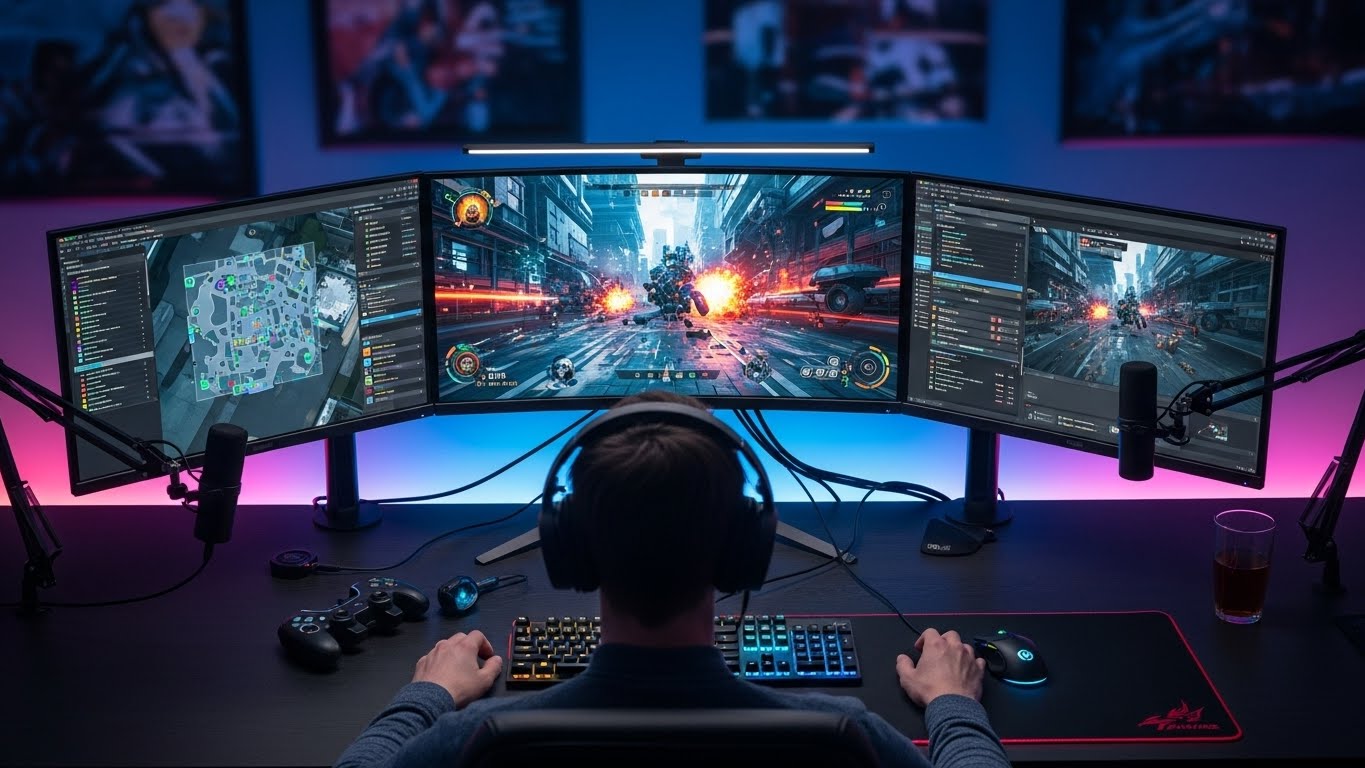
Gaming has come a long way since the days of simple arcade machines and pixelated graphics. Today, it is not merely a pastime; it has become a cultural phenomenon, a professional sport, and a major driver of technological innovation. From immersive single-player adventures to competitive online multiplayer experiences, gaming is shaping how we interact, entertain ourselves, and even learn. In this blog, we will explore the evolution of gaming, the cultural impact it has, technological innovations that drive it, the psychology behind gaming, and its future potential.
The Evolution of Gaming
The history of gaming spans decades, beginning with basic arcade games in the 1970s and early home consoles in the 1980s. Games like Pong and Space Invaders captured the imagination of players, offering simple yet engaging experiences. The introduction of home consoles by companies such as Nintendo and Sega revolutionized the industry, bringing games into living rooms and creating a culture around gaming.
In the 1990s and early 2000s, gaming experienced further evolution with the rise of 3D graphics, more complex gameplay mechanics, and story-driven experiences. Titles like Final Fantasy, The Legend of Zelda, and Grand Theft Auto set new standards for narrative, interactivity, and player engagement. The internet era then transformed gaming once again, enabling online multiplayer games, digital distribution platforms, and eSports competitions.
Today, gaming is a multi-billion-dollar industry encompassing consoles, PCs, mobile devices, and even cloud-based streaming platforms. Its evolution reflects not only technological advancements but also the changing ways people connect, compete, and consume entertainment.
The Cultural Impact of Gaming
Gaming has transcended being just a hobby and has become a significant cultural force. It has influenced music, movies, fashion, and social media. Many popular games now serve as cultural touchstones, shaping the imagination of entire generations. Titles like Minecraft, Fortnite, and Among Us have created communities where players interact, create, and collaborate in ways that extend beyond the game itself.
Social interaction is a key aspect of gaming culture. Multiplayer games, online forums, streaming platforms, and gaming conventions allow players to connect with others who share their interests. Streaming platforms have also turned gaming into a spectator activity, where audiences can watch skilled players, learn strategies, or simply enjoy the entertainment. This blend of social engagement and entertainment has solidified gaming as a central aspect of modern culture.
Technological Innovations in Gaming
Technology is at the core of modern gaming. Graphics, processing power, artificial intelligence, and virtual reality are just a few areas where innovation has transformed the player experience. The evolution of graphics has enabled developers to create realistic worlds, dynamic characters, and cinematic storytelling. Real-time rendering, ray tracing, and high-definition textures make modern games visually stunning, providing an immersive experience previously unimaginable.
Artificial intelligence plays a crucial role in making games challenging and engaging. AI-controlled characters adapt to player strategies, creating dynamic gameplay experiences. Procedural generation algorithms allow for vast, unique game worlds, keeping players exploring for hours. Meanwhile, physics engines make interactions in virtual worlds feel realistic, from character movement to environmental effects.
Virtual reality and augmented reality are redefining the way players experience games. VR headsets transport players into fully immersive 3D environments, allowing them to interact naturally with virtual worlds. AR games overlay digital elements onto the real world, blending physical and virtual experiences. These technologies are opening up new possibilities for storytelling, education, and social interaction within gaming.
Mobile gaming has also emerged as a significant force, democratizing access to interactive entertainment. Smartphones and tablets allow players to enjoy games anywhere, with touch controls, gyroscopic sensors, and cloud connectivity enabling rich gameplay experiences. Mobile gaming has expanded the industry’s reach, bringing gaming to millions who might not own a console or gaming PC.
The Psychology of Gaming
Understanding why people play games is key to understanding the gaming phenomenon. Games appeal to humans on multiple psychological levels, including challenge, reward, and social connection. Game mechanics such as leveling up, achievements, and leaderboards tap into intrinsic motivation, encouraging players to continue playing and improving.
The concept of flow is central to the gaming experience. Flow is a state where players are fully immersed in a task, losing track of time and experiencing deep focus. Well-designed games create a balance between challenge and skill, allowing players to enter this state and experience satisfaction and engagement.
Social interaction also contributes to the psychology of gaming. Multiplayer games provide opportunities for collaboration, competition, and communication. Players form friendships, share strategies, and build communities, which enhance the emotional appeal of gaming. For many, gaming is not just about playing; it is about belonging to a community and expressing themselves creatively.
Gaming as a Professional Sport
The rise of eSports has transformed gaming into a professional and competitive field. Professional gamers compete in tournaments with large prize pools, and teams are sponsored by major brands, similar to traditional sports. Games such as League of Legends, Dota 2, Counter-Strike, and Fortnite have become international competitions with millions of viewers and highly skilled players.
Streaming platforms have also given rise to professional content creators who entertain audiences while playing games. These streamers have massive followings, influencing trends in the gaming industry and culture at large. Gaming is now recognized as a viable career path, from professional players and content creators to game developers and esports commentators.
Gaming and Education
Beyond entertainment, gaming has educational potential. Many games are designed to develop problem-solving skills, critical thinking, and creativity. Strategy games, puzzle games, and simulation games encourage players to plan, analyze, and experiment, fostering cognitive development.
Educational institutions are increasingly incorporating gaming into learning experiences. Gamified learning platforms engage students by making lessons interactive and rewarding. Virtual simulations allow learners to practice skills in safe, controlled environments, from medical procedures to historical explorations. Gaming has the power to transform education, making it engaging, experiential, and impactful.
Challenges in the Gaming Industry
Despite its growth, the gaming industry faces challenges. Addiction and excessive screen time are significant concerns, particularly among younger players. Developers and communities are increasingly emphasizing responsible gaming, parental controls, and time management tools to mitigate these risks.
Monetization practices in gaming, such as in-app purchases and loot boxes, have sparked debates about fairness and ethics. Regulatory bodies in various regions are scrutinizing these practices to protect consumers, particularly minors. Developers must balance revenue models with ethical considerations to maintain trust and credibility.
Diversity and representation are ongoing challenges in gaming. Historically, the industry has been criticized for lack of diversity in characters, stories, and development teams. However, there is a growing push for inclusive representation, ensuring that games reflect the wide range of experiences and cultures in the real world.
The Future of Gaming
The future of gaming promises even more immersive, interactive, and personalized experiences. Advances in artificial intelligence, cloud gaming, virtual reality, and augmented reality will continue to push the boundaries of what is possible. Games may become more adaptive, responding dynamically to player choices and preferences.
Social interaction will continue to be a cornerstone of gaming. Cross-platform multiplayer experiences and virtual worlds will allow players to connect regardless of location or device. Gaming will increasingly merge with other forms of media, creating hybrid experiences that combine storytelling, social interaction, and interactivity.
Artificial intelligence may also enhance content creation in gaming, allowing for procedural generation of expansive worlds, dynamic narratives, and intelligent non-player characters. Players could influence game development in real time, creating personalized experiences that evolve with their choices and actions.
Mobile and cloud gaming will democratize access to high-quality experiences, allowing anyone with a device and internet connection to participate. Gaming will become more inclusive, reaching new audiences and creating new communities around shared experiences.
Conclusion
Gaming is no longer just a hobby; it is a global phenomenon that influences culture, technology, and society. From its humble beginnings in arcades to the immersive, interactive worlds of today, gaming has evolved into a multifaceted industry with entertainment, social, educational, and professional dimensions.
Technological innovation continues to redefine the possibilities of gaming, while social interaction and psychology drive its widespread appeal. Challenges such as responsible gaming, diversity, and monetization practices are being addressed as the industry matures. The rise of eSports, streaming, and educational applications demonstrates that gaming is not only a form of entertainment but also a platform for skill development, professional achievement, and cultural expression.
As we look to the future, gaming will continue to grow in complexity, accessibility, and influence. Its ability to merge storytelling, interactivity, and social engagement ensures that it will remain a central part of global entertainment and culture. Gaming is not merely about playing; it is about experiencing, connecting, and creating in a digital age that continues to evolve at an unprecedented pace.